




Alert in the Pines! Processionary Caterpillars Have Arrived Early in Cartagena (and Your Dog Could Be in Danger)
▶︎Last Saturday I decided to take advantage of the good weather to go up to Monte Fajardo, right here in Cartagena. The idea was to enjoy a quiet walk with some friends among the pines which, although not very tall in that area, really bring the landscape to life. But as soon as we started the route, we came across a surprise: a line of caterpillars crossing the path.
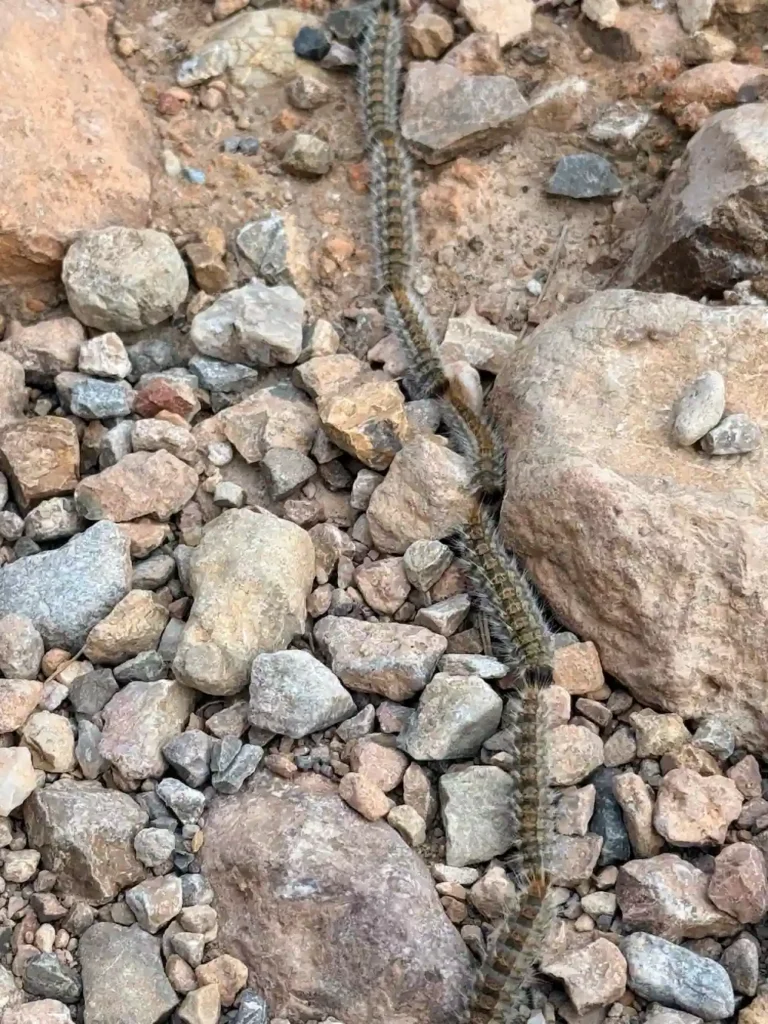
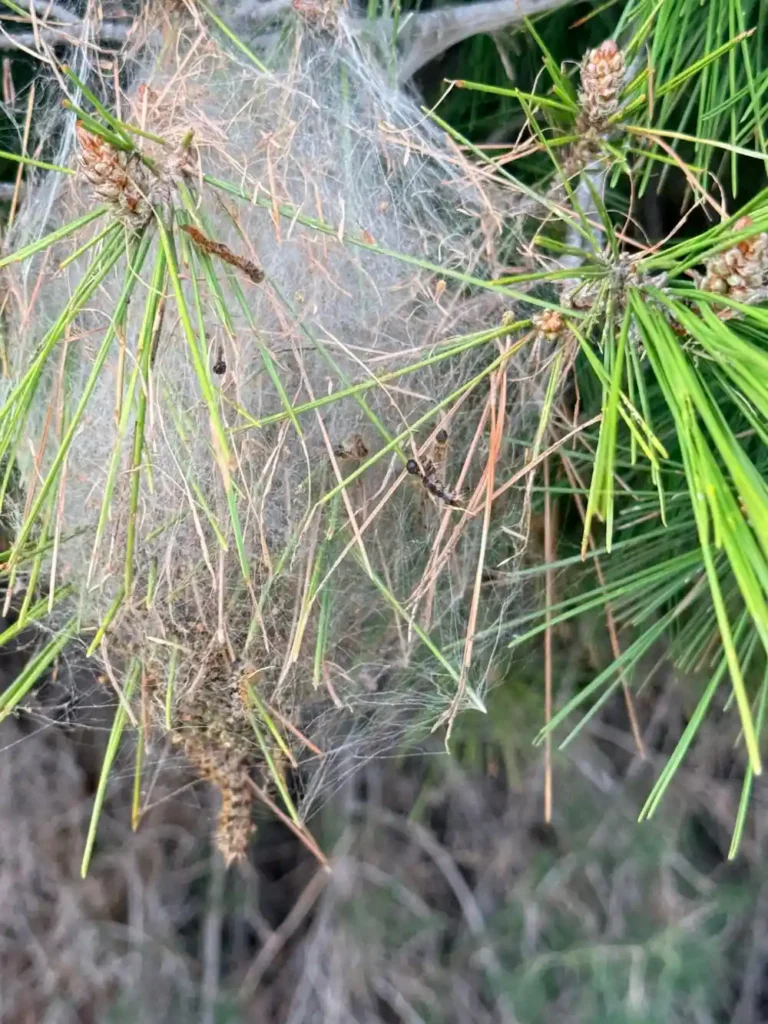
Yes, the feared pine processionary (Thaumetopoea pityocampa) is already here. And be careful, because it has come ahead of its usual calendar.
Right at that moment we crossed paths with a man walking his dog. I had to warn him quickly: "Watch out for the dog, there are processionary caterpillars!". The man had not noticed, and this is the biggest fear of anyone who has a pet in the Mar Menor area or the Campo de Cartagena: that their dog, out of curiosity, brings its nose close.
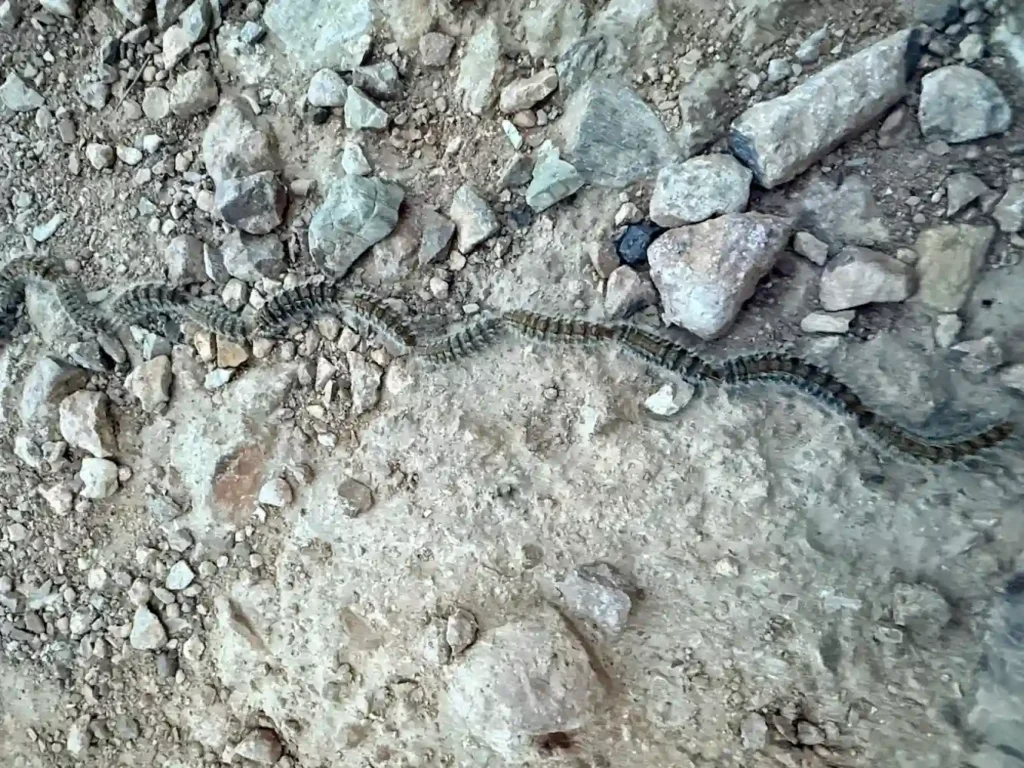
Table of contents
Why are we so worried?
It is not just a "hairy caterpillar". Contact with its urticating hairs is extremely dangerous. In dogs it can cause anything from a severe allergic reaction to necrosis of the tongue if they lick or touch it. If you see your dog drooling excessively or swelling up after a walk in pine areas, run to the vet!
The curious thing about this insect (and why we are seeing it now)
What we saw on Monte Fajardo were caterpillars looking for soft soil. Their biological instinct makes them come down from the tree to bury themselves, form their chrysalis and emerge again as moths in summer.
Fun fact: They are called "processionary" because they blindly follow a leader (usually a female), forming those long lines. Never break the line by stepping on them! You will spread the urticating hairs into the air and they will sting you anyway.
The change of timing
Normally, we expected this "descent" in March or April. But with the very mild winters we are having in the Region, the cycle has accelerated.
What can we do?
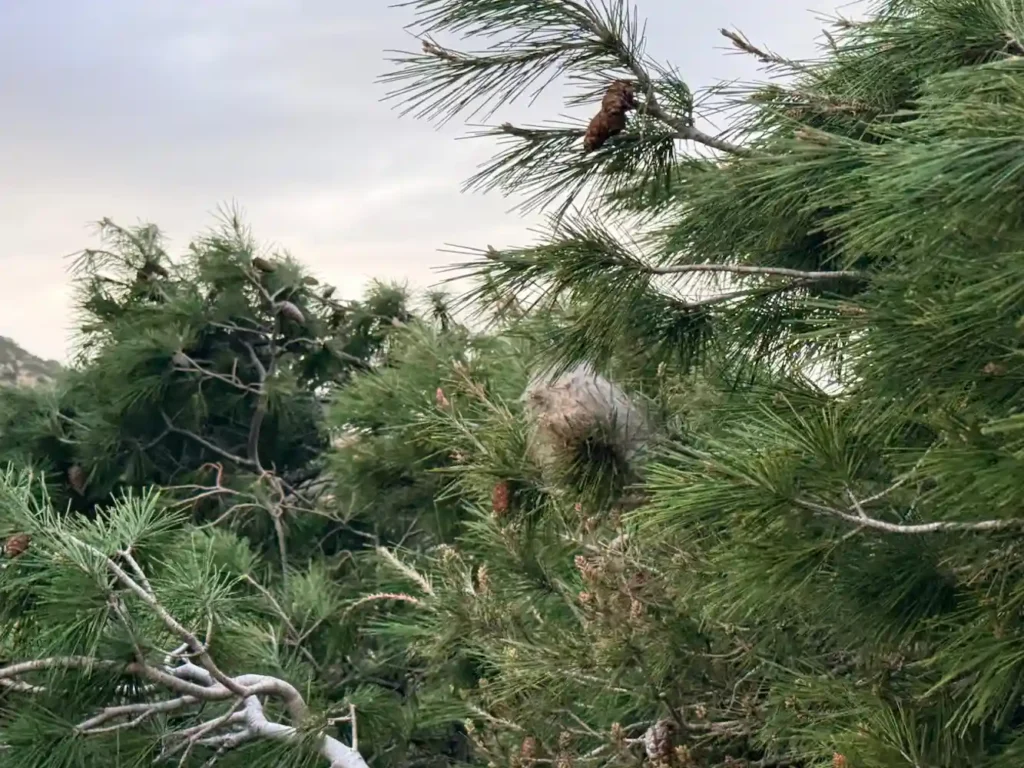
If you have pines on your property, whether in Cartagena, in developments in La Manga or in nearby towns such as La Unión or Torre Pacheco, you are surely wondering how to get rid of them.
Here comes the technical part explained:
Right now (Winter/Spring)
If you can already see the white nests in the branches, arriving late is a problem.
- What usually does NOT work well now: Spraying with a backpack sprayer. The "nest" is very dense and impermeable; the insecticide does not penetrate. Unless you use long‑range cannons and soak them thoroughly.
- What DOES work: Collar traps. They are placed around the trunk and force the caterpillar to fall into a bag when it tries to go down to the ground. It is clean and prevents them from reaching the areas where children or dogs play.
Real prevention (September–October)
The best attack is a good defence. In autumn is when the caterpillars are tiny and vulnerable.
- Endotherapy: These are injections into the trunk of the pine. The tree distributes the product and the caterpillar dies when eating the needle. It is the cleanest and safest option for inhabited areas.
- Encouraging predators: Did you know that bats and tits are natural devourers of moths? Installing bat boxes (always avoiding south‑facing exposure so they do not overheat) is a fantastic biological aid.
In short... If you go hiking in the hills these days, keep your eyes glued to the ground. And if you have pines in your garden and see those white nests, don’t wait until March. Act now, because they certainly won’t wait.
Related posts
ROESB 1491-MUR-T24
Control de Plagas Levante© (2026). All rights reserved.
Digital marketing by: CG Digital Lab